





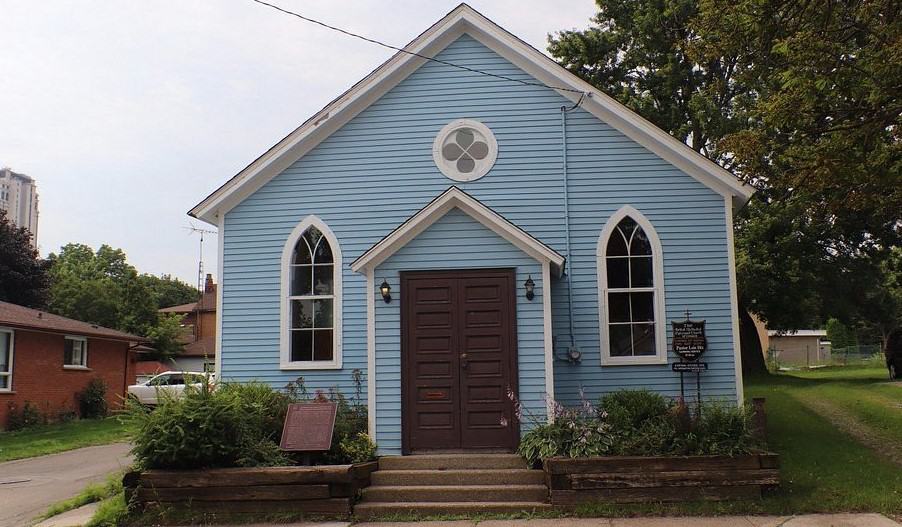
With its connection to Underground Railway freedom fighter Harriet Tubman, the Salem’s Chapel British Methodist Episcopal Church on Geneva Street in St. Catharines gets a lot of attention.
Given Tubman’s historical cache for her remarkable achievements, it’s not surprising that St. Catharines B.M.E. Church gets the attention that it does. In fact, it’s well-deserved.
However, there’s also a Niagara Falls B.M.E. Church that, while lesser-touted, has some impressive credentials behind it. In fact, it can make a claim that the St. Catharines one cannot.
It was moved from one location in the city to another… on logs. The entire structure was physically lift and pushed from its initial location at Portage Road and Murray Hill to its present location at 5674 Peers Street and was rolled there on top of logs.
Not only that but when the church was slated to be demolished a few years back, it was saved by the late Wilma Morrison, a St. Catharines woman who was known by many as a modern-day Harriet Tubman due to her tireless efforts towards the preservation of black history in Canada. Morrison passed in April 2020, due to complications from COVID-19.
The B.M.E. Church in Niagara Falls, much like its St. Catharines counterpart, was built by the local black community in 1836, many of whom had escaped to Canada from the U.S. via the Underground Railroad.
The original land at Portage Road and Murray Hill was donated by Oliver and Matilda Pernell, both of whom arrived in Niagara via the Underground Railroad and the money for the move to Peers Street was supplied by Burr Plato, who also used the Underground Railroad.
The church renamed as the Nathaniel Dett Memorial Chapel of the B.M.E. Church in 1983 after Nathaniel Dett (1882-1943), a parishioner, who became an internationally renowned musician and composer of North American sacred music.
Parks Canada, which designated it as a historical building in 2000, describes the building as a “gable-roofed, three-bay, single-storey building features regularly placed openings. Its gable end features a quatrefoil window set above a modest entry porch flanked by lancet windows.”
The description continues, “Its open speaking box design and intimate interior speak to the close involvement of its African-Canadian congregation. Official recognition refers to the exterior and interior of the building at the time of designation in 2000.”

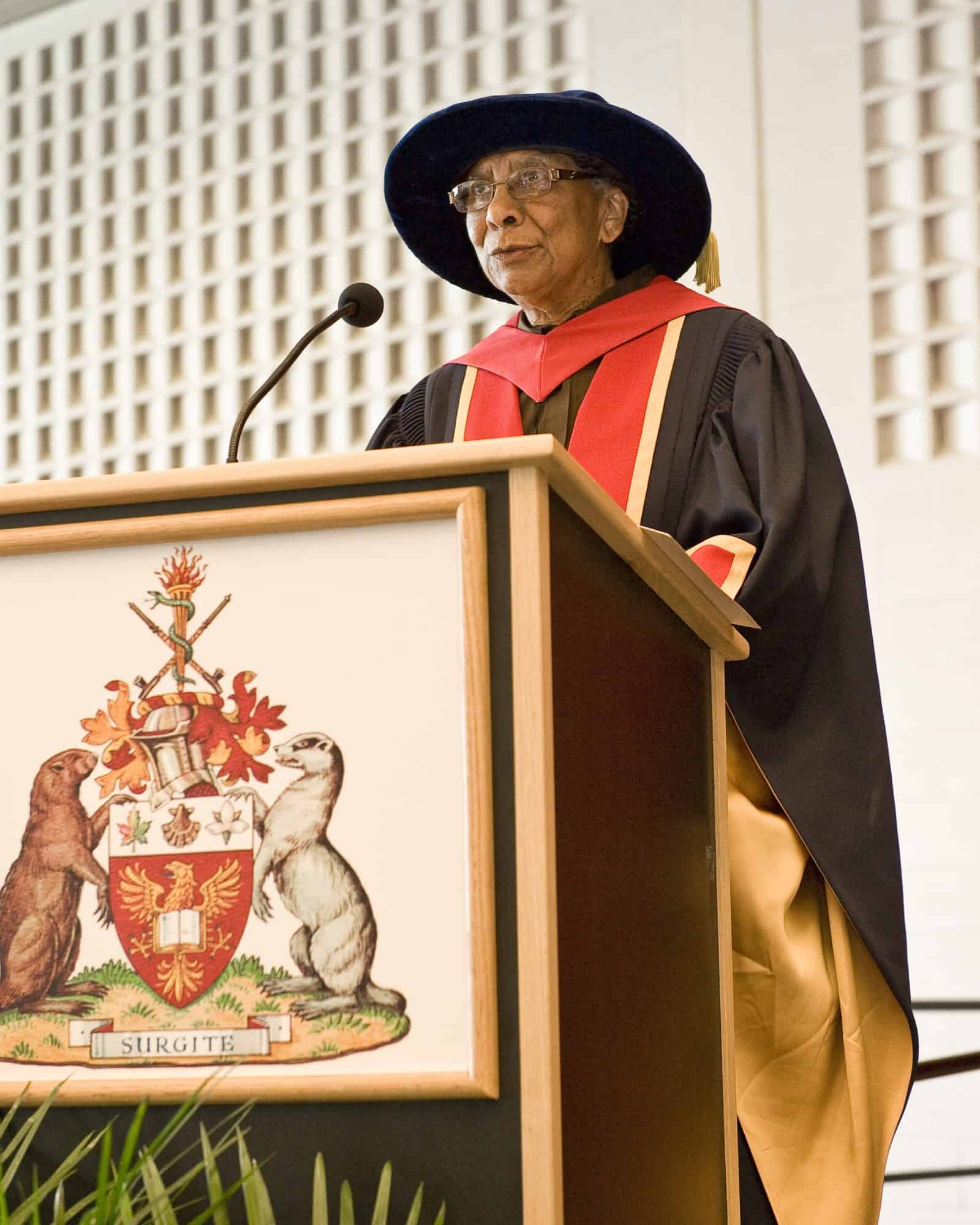
Left: An early photo of Niagara Falls’ British Methodist Episcopal Church courtesy of the Niagara Falls Public Library. Right: A photo of Wilma Morrison courtesy of Brock University.
inNiagaraRegion's Editorial Standards and Policies